Key Takeaways
Click each item to mark as read
- 1✓
Delayed is not lost - your bag is only officially lost after 21 days.
Until day 21, the airline is still actively searching. Only after this point does the claim type change and full lost baggage compensation becomes available.
- 2✓
Keep all receipts - essentials like toiletries and basic clothing are reimbursable.
Airlines must cover reasonable essential purchases under the Montreal Convention. Luxury items won't qualify. Even small amounts count, so save everything.
- 3✓
You have 21 days from your flight date to file a claim - not from when your bag returns.
This is the most commonly confused deadline. Miss it and the airline can legally reject your entire claim, no matter how strong it is. Set a reminder the moment you land.
- 4✓
International flights: airlines owe up to $2,000 USD / EUR 1,920 per passenger.
This cap comes from the Montreal Convention, covering 140+ countries including the US, UK, EU, and Canada. Domestic US flights follow DOT rules with different limits.
- 5✓
File a PIR at the baggage desk before leaving - without it, you cannot make any claim.
PIR stands for Property Irregularity Report. It takes 5 minutes, it's free, and without it no airline will open a compensation case. There is no substitute.
When your baggage does not arrive when you do, you could get airline reimbursement for the essential items you had to buy while it was missing. The rules depend on your route, but in many cases airlines are legally required to pay back reasonable expenses if you follow the right process and submit the claim on time.
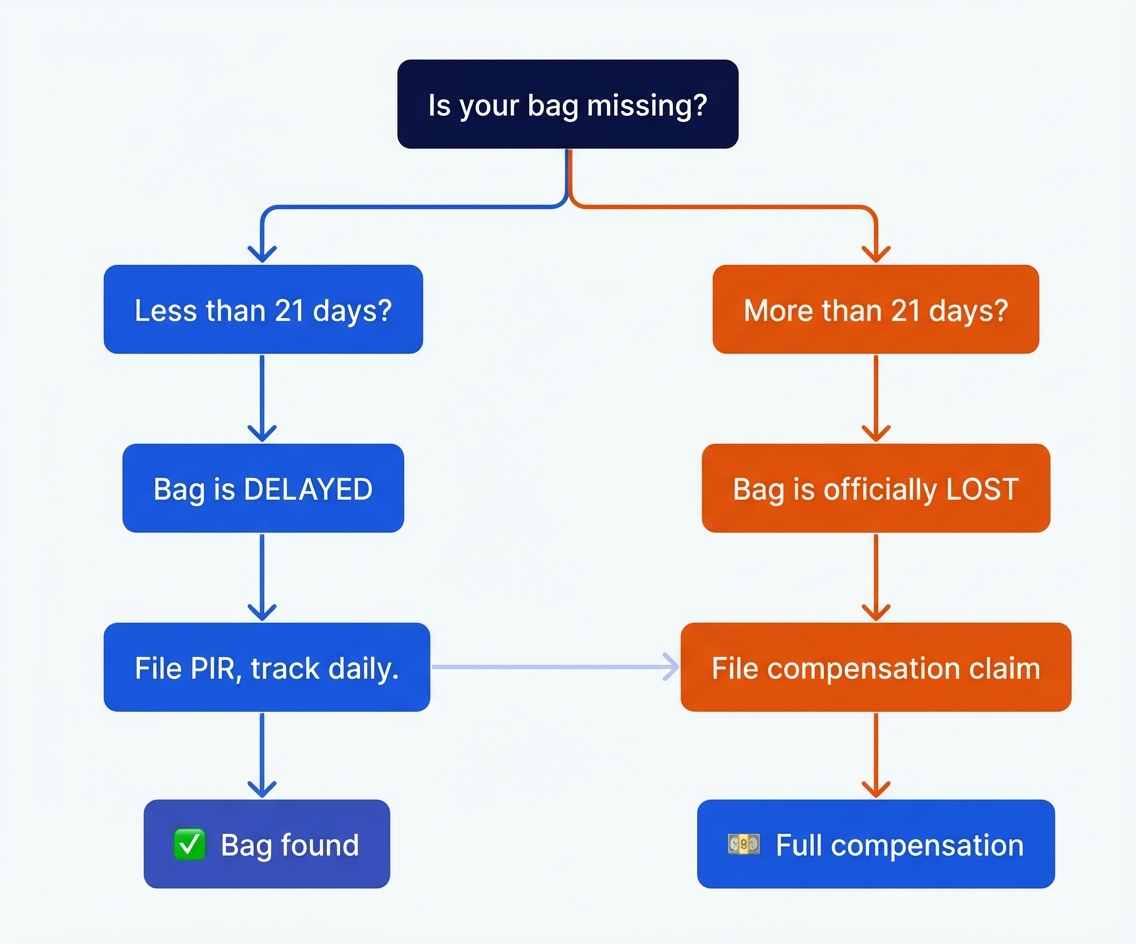
Delayed baggage and lost baggage are not the same thing. Your bag is only officially considered lost after 21 days.
On international flights, airlines can be liable for up to about $2,000 USD / EUR 1,920 in baggage-related costs under the Montreal Convention.
While your bag is missing, you can claim back the cost of essential purchases such as toiletries and underwear.
You have 21 days from your flight to file a delayed baggage claim. Miss that window and the airline can refuse it.
What's the difference between delayed and lost baggage?
When your bags do not show up on the carousel, you might think of them as lost, but airlines treat them as delayed until they have been missing for a specific period of time.
Delayed baggage means your belongings did not make it onto your flight or were sent to the wrong destination, but are still expected to be returned to you. Most delayed bags do turn up within a few days.
Lost Baggage means checked baggage is only considered officially lost if it has not been returned to you within 21 days of your flight. Until that point, your bag is classified as delayed.
Some airlines will call a bag lost after only 5 days. Under international rules, though, 21 days is the point when your luggage must be treated as lost.
This difference matters because the compensation process is different for each case. This article focuses specifically on delayed baggage, what you are entitled to, how reimbursement works, and how to file a claim.
How much compensation can you get for delayed baggage?
Based on the Montreal Convention, you could claim up to about $2,000 USD / EUR 1,920 per passenger for delayed, lost, and damaged baggage on international routes. This is the airline's maximum liability, not a fixed payout. The final amount depends on your situation and the evidence you provide.
Our experts can review your situation for free. Most delayed baggage claims are resolved within 3 to 6 weeks.
What can you claim for a delayed bag?
If your checked bag is delayed, and you're away from home, airlines are generally expected to cover the cost of the essential items you had to buy because your luggage wasn't available when you needed it.
This typically includes:
The key word here is essential.
Airlines will not reimburse you for clothing hauls, luxury items, or anything deemed non-essential. This is why it's so important to keep itemised receipts for everything you buy. These will serve as evidence for your reimbursement claim.
Purchasing essentials when you're away vs returning home
If your bag is delayed on the return leg of your journey (meaning you land at your home airport without it) airlines will typically offer less in their reimbursement payout. Their logic is that you have access to your own clothes and belongings at home. That said, you may still be able to claim for any essential purchases you had to make before the bag was returned to you.
Some airlines have an established daily rate for delayed baggage spending, so check your carrier's luggage policy directly, because this varies significantly between airlines.
When to make delayed baggage reports and claims
There are two separate timeframes you need to pay attention to:
When to make a baggage report: as soon as you notice the delay, ideally before leaving the airport.
When to file a baggage claim: within 21 days, with receipts and supporting documents.
If you don't report your delayed baggage or file your claim within the correct timeframe, the airline will most likely reject it outright, even if you have plenty of evidence to support it.
Making a baggage report
As soon as you realise your bag hasn't arrived, report it before you leave the airport.
It's usually located near the baggage reclaim area. Do this before you leave the terminal - don't assume it will sort itself out.
Ask the agent to complete a PIR. This creates an official record of the delay and gives you a reference number you'll need for tracking and your claim. Get a copy.
Toiletries, underwear, basic clothing - keep itemised receipts for everything. No receipt = no reimbursement.
Most airlines have an online portal. If no agent is available, report the delay on the airline's website within 24 hours.
Turn the airport report into a reimbursement claim
Your PIR starts the tracing process, but it does not reimburse you automatically. Once the bag is logged in the airline system, start building the claim file you will later submit for your expenses.
Important
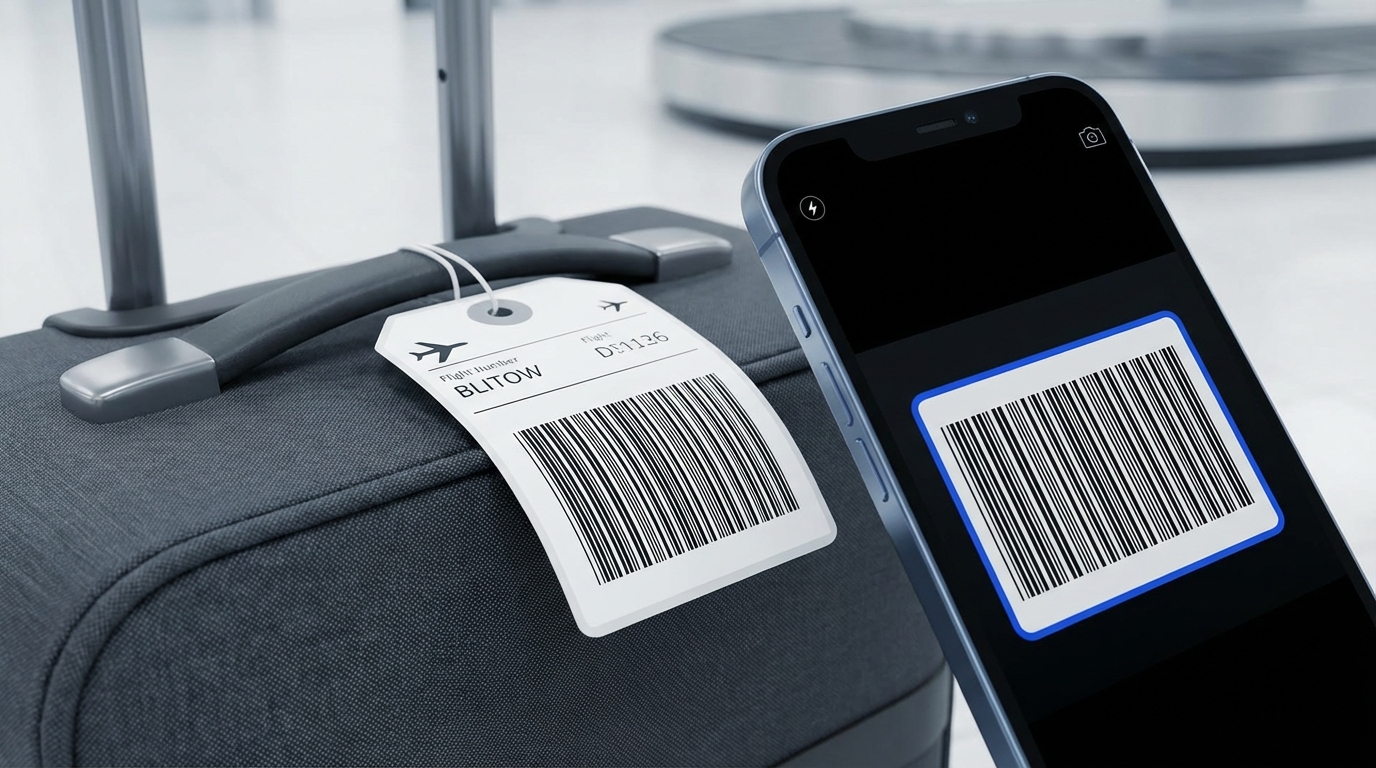
Airlines often underpay claims when receipts are missing or the purchases look excessive. A neat file with the PIR, baggage tag, and itemised receipts gives you the best chance of full reimbursement.
Filing a delayed baggage claim
Once your bag has been returned, you have 21 days from the date of your flight to submit a reimbursement claim. This deadline is set by the Montreal Convention and is strictly applied.
To submit your claim, navigate to your airline's website and look for Baggage Mishandling or Baggage Help. From there, you will need to upload all the documents related to your delayed baggage, including:
You might be asked to upload copies of your boarding pass or other flight-related documents, so keep these handy.
What if the airline rejects your claim or ignores you?
Unfortunately, airlines don't always play fair. If your claim is refused, underpaid, or simply ignored, you do have some options.
Escalate to an ADR scheme
If the airline is a member of an approved Alternative Dispute Resolution (ADR) scheme, you can escalate your complaint to an independent body that will review the case and make a binding decision.
Contact the aviation authority in your country
The Civil Aviation Authority is the UK's aviation regulator, while the Office of Aviation Consumer Protection (OACP) is the U.S. equivalent. These agencies don't handle individual disputes directly, but they can take action against airlines that consistently fail to uphold passenger rights. Filing a complaint simply puts your case on record.
Use a specialist claims service like BagHelp
A specialist baggage claims company can take on your case and deal with the airline directly on your behalf on a no win, no fee basis. We can handle a claim from the beginning, pick up the case where you left off, or take over if it's been ignored or rejected.
How BagHelp can handle your reimbursement claim
Airlines can be slow to respond, quick to underpay, and generally difficult to communicate with, especially when you're trying to do it alone.
Here's a recent baggage delay case we handled to show you how all the rules work in practice:
A passenger arrived without their checked baggage containing essential work tools. They had to replace items urgently. BagHelp submitted a claim with proper documentation - receipts and proof of delay - and recovered the full out-of-pocket cost.